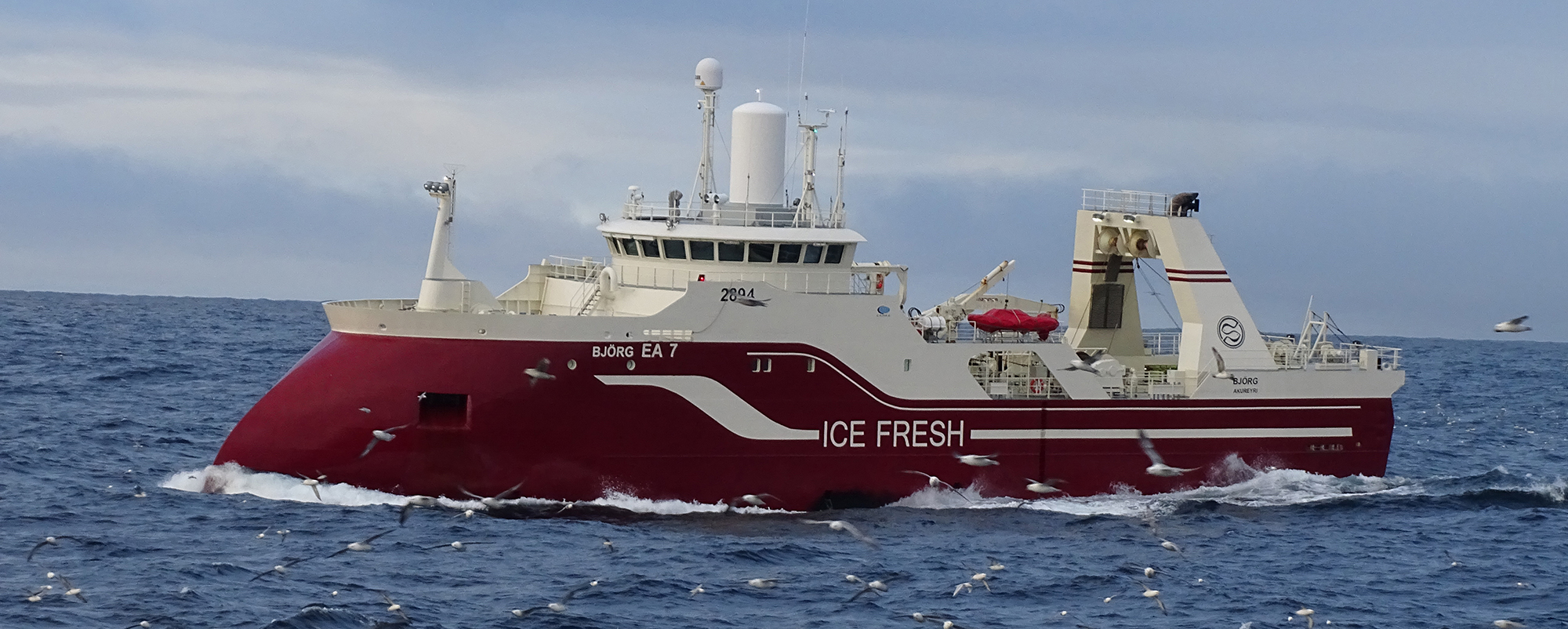
The Flow Gear hopper footropes developed by Mørenot and Hampiðjan have been performing successfully in Norway for the last two years, with this gear in use on-board four trawlers there, as well as one in Germany and another in the UK. In Iceland Bjorg EA-7 is fishing with the latest version of Flow Gear. There are seven trawlers now outfitted with Flow Gear, while two more – in Norway and Germany – are waiting for their new gear to be delivered, demonstrating the strong interest in this development in fishing gear technology.
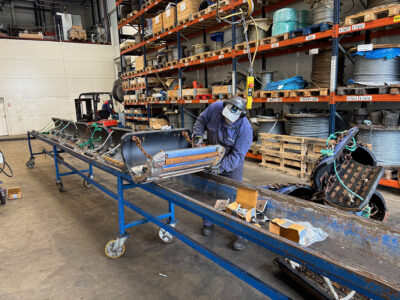 These hopper footropes are constructed with semi-circular sections in heavy plastic instead of the conventional rubber discs in rockhoppers. During a tow with standard gear a large section of the footrope lifts off the seabed when an obstacle is encountered. But with Flow Gear only those sections passing over the obstruction lift, and this has been shown to result in better catches under challenging conditions.
Demersal fishing gear in Iceland tends to be different from the gear used in Norway, as Icelandic grounds are generally harder and coarser than elsewhere in the north-east Atlantic – which demands more resilient Flow Gear footropes to cope with these conditions.
Development work with Samherji went into adapting this gear for Icelandic grounds. Trials began on board Bjorg EA-7, where this gear has been mainly in use since mid-January.
This work has been conducted in co-operation with the crew, and advice and feedback from skippers Gudmundur Freyr Gudmundsson and Árni Rúnar Johannesson has been a key factor in understanding which aspects need to be strengthened and adjusted. The design of the protective steel fittings has been altered to enable the semi-circular plastic sections the necessary flexibility to bend under tension when they hit a rock or a fastener, while returning to their original shape as soon as the tension is released. Sacrificial surfaces have been modified to prevent the bolts holding protective steel sheaths from shearing. Netting had a tendency to be pulled into the semi-circular sections from behind, but this problem has been solved by using rounded bolts and by replacing chain that was liable to part with soft Robus HMPE rope.
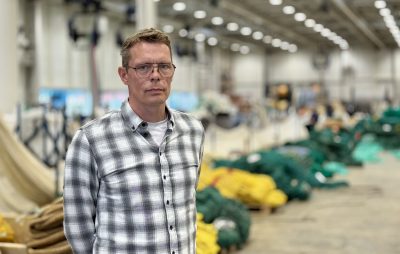 ‘It has been a real pleasure to work with the crew of Bjorg in this development. We’re now completing changes to the configuration of the last sections in the footrope, which will prolong its working lifetime. It’ll be exciting to see how this plays out,’ said Hampiðjan fishing gear designer Einar Skaftason.
The new layout reduces the overall tension on the gear, enabling a better opening and stability during a tow. Trials also indicate that water flow up and over the footrope serves to direct fish more effectively into the gear.
A further aspect of the trials was to reduce environmental impacts, as this footrope design has a lower effect on the seabed compared to conventional rubber rockhoppers.
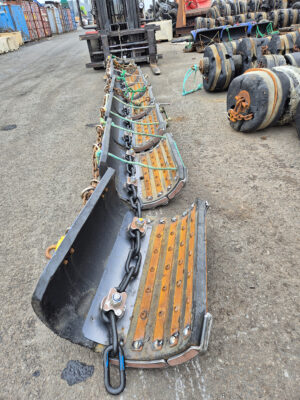 The Flow Gear footrope on board Bjorg is approximately 6 tonnes lighter than a comparable rubber disk hopper foortope, making the gear much more easily handled on deck. This means less tension on the winches when hauling and shooting, a smaller deck space requirement and replacing sections if required is an easier process.
These upgrades to Flow Gear mean that this is a fully developed item of fishing gear, designed to cope with conditions on Icelandic fishing grounds, with no obstacle to this now becoming part of the product line and available for purchase.
A patent application for the Flow Gear was made some time ago and this process is well under way.
Further information can be found here:
Revolutionary Semicircle Hoppers as an Alternative to Rockhopper
Photo of Björg EA 7: Vigfús Markússon.