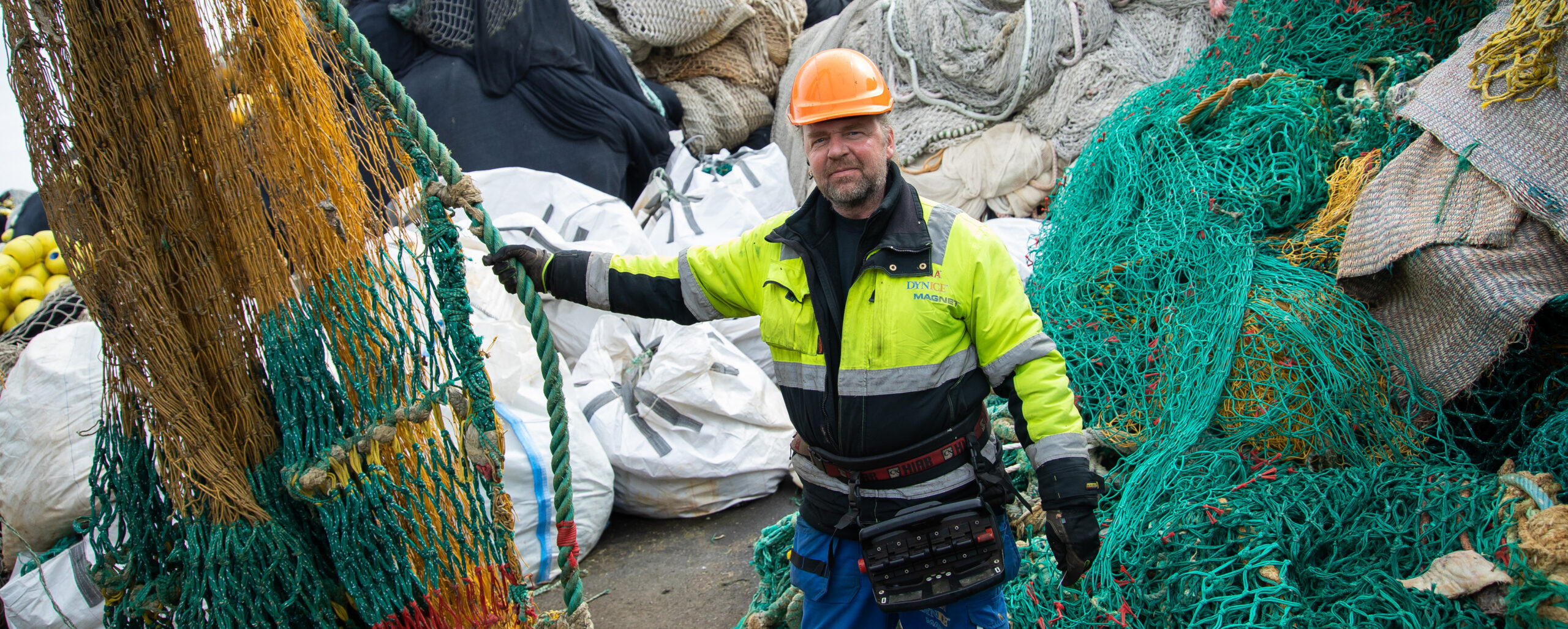
In 2025, Hampidjan Iceland collected a total of 1,229 tonnes of used fishing gear and related equipment for recycling. Most of the material originated from fishing companies delivering used gear for sorting and recycling, with a smaller share generated internally from Hampidjan’s own production processes.
The volume is comparable to the previous year. For reference, approximately 1,128 tonnes were recycled in 2023 and around 1,295 tonnes in 2024. Annual volumes have therefore remained relatively stable in recent years, ranging between 1,100 and 1,300 tonnes.
The largest share of material recycled in 2025 was nylon (PA) from fishing gear, amounting to approximately 244 tonnes, in addition to 66 tonnes from aquaculture nets. This was followed by about 147 tonnes of polyethylene (PE) fishing gear and 109 tonnes of polypropylene ropes. A significant category was also rockhopper gear, totalling around 311 tonnes.
Approximately 212 tonnes of material were not suitable for conventional material recycling and were therefore directed to energy recovery.
All metals were recycled domestically in Iceland, while other materials were exported in 62 forty-foot containers to recycling partners abroad. Considering only the plastics sent for recycling overseas, the total amounted to 1,122 tonnes, while Hampidjan Iceland imported 976 tonnes. This means that 15% more material was exported by Hampidjan than imported, indicating a continued reduction of accumulated stockpiles of used fishing gear across the country.
Materials are directed to different processors depending on their composition. The largest share in 2025 was handled by the Norwegian company Nofir, which received approximately 530 tonnes. Other recipients included the Danish company Plastix (around 205 tonnes) and the Lithuanian company Polivektris (about 85 tonnes). In addition, roughly 311 tonnes were sent to Granuband in the Netherlands, with smaller volumes distributed to other specialised recycling partners.
This type of annual overview shows that recycling of used fishing gear has become an established part of the fisheries sector in recent years. Improved sorting and advances in collection and processing have made it possible to return an increasing share of materials back into the raw material cycle. Close cooperation between manufacturers, fishing companies, net lofts and specialised recycling firms is essential in this effort, enabling continued reductions in waste and better utilisation of valuable materials from used fishing gear.